Thursday, 3 November 2016

Serving Together

It is an absolute privilege to be called to serve with Hands at Work. We are blessed by being able to work with men and women from all over Africa who have daily sacrifice far beyond our own. In the past couple of months, I have been reminded of this time and again. 

I have been able to walk in some of our toughest communities in Malawi so far off the map that it causes cars to break down. I’ve served alongside Zimbabwean leaders who give everything to reach the most vulnerable children in communities all around them. We have joined together with 50 of our leaders (African and International) for a time of repentance, confession and commitment to go even further in reaching Africa’s most vulnerable. 

Back at the beginning of September, I had the opportunity to visit Zimbabwe (for the first time) and join a team of us to share in a wedding of one of our long term Zimbabwean volunteers, Andrew. It was a time of true celebration as people from all over came together to celebrate Andrew and Kuda getting married. As with our own wedding, many of the Hands family rallied around the wedding organisation and helped make the day as memorable as possible for Andrew and Kuda.


Following the wedding, I stayed on for a week to support our Zimbabwe team and to get to see some of the communities I had heard so much about. It was a surprise and joy to be able to visit a young girl named Mary* on one home visit I did. She has been struggling with seizures for many years and doctors have tried many things to help her. Over the years, I have seen her name come through the receipts, when specific medical care and attention was needed for her  but had never met this young girl. It was such a joy to finally be able to put a face to this name! While visiting her home I learnt that next term she would be able to return to school because her seizures were now under control enough for her to be able to make the walk to school safely. When I am working in the office, it can be easy to become disconnected from the children, sitting behind a community and working with numbers. I have to remind myself, each number is representing a vulnerable child. In this particular case, the link was so clear and I thank God that he took us to that home when I was in Zimbabwe. Please join with me in continuing to pray for Mary as her improvement continues and she is able to attend school consistently. 

At the beginning of October, Morgan and I travelled to Zambia to prepare for our annual gathering. We knew this time would be a bit different as it was a much smaller group of African and International leaders coming together. We had many times throughout the week where God revealed to us the brokenness in our own hearts and repentance that was needed between each other and to God. At the end of the week, everyone was empty on energy but full of the spirit. We were ready to reach our vulnerable children with a new energy and ready to make situations even more personal. 


Immediately after this gathering, I travelled to Malawi by bus with member of our local office there. It was a long journey but we made it safely to Dedza, right on the border of Mozambique. I was spending time with the Service Centre (SC, local office) team to help with budgets, projects and planning for 2017. I had one day where I was able to visit a community. Chinku is a community about an hour off of the main tar road. We took a taxi along dirt roads right into the mountains very close to the border of Mozambique. Many of the children we care for in this community are from families who have fled Mozambique. While driving from one of our Care Points to another our car broke down. So our driver and one of the local staff stayed to fix the car, while Catherine (our Care Worker), Ivy (our bookkeeper in Malawi) and I started on our Holy Home Visit from the car to the home. On our walk, I got to know Catherine’s story and how for the last few months, the children have been coming to receive their food and care from her own house because the normal Care Point had fallen down and was being rebuilt. When Jesus speaks of sacrificial giving, this is a true example! When we reached the home, we met Gogo Florence*, who was looking after her granddaughters, Cindy* and Naomi*. Cindy was at school when we visited but Naomi was not able to attend school today because her family could not afford the exam fees. When we talked through the situation, we learnt that the Gogo was going to sell some of the little dried grass she had to raise money for the exam fees. The family had recently been given some old maize cobs from another family who had discarded them because of the quality. Gogo Florence, and her girls had to pick through the maize to get rid of the rotten kernels, so they could use what was left. It is nearing planting season, so Gogo sends the girls to the field nearby to plough it in hope that rains will come in a few weeks’ time. If the rains don’t come and the drought continues, this plough will all be in vain. It’s heart-breaking to see how the drought continues to affect so many families across Africa. Please continue to join with us in praying for the many families across Africa who are being affected by the drought. 

Gogo Florence, Naomi and Catherine
To learn more about Hands at Work’s drought response visit our website.

Over the next few weeks, we have time at our home in South Africa and then at the end of November, my parents are coming to visit which is exciting. A couple of weeks later Morgan’s parents will be visiting. We are blessed to have family willing to visit us as we continue to serve Africa’s most vulnerable.

- T

Sunday, 11 September 2016

Cape Town

As part of our annual leave this year we had the chance to explore Cape Town! We have done very little travel in South Africa over the past 6+ year, it was the perfect mix of rest and adventure.


Friday, 29 July 2016

Something Different

We have been back from Zambia for a few days now, Tommy's trip to the DRC did not work out as planned but we were happy for the time with the Hands family in Zambia.

Recently I spent two weeks with a team of nurses from the US in a community called Baraka, Zambia.  It was a beautiful few weeks connecting with children and Care Workers as we helped to provide for their medical needs. I really enjoy my time with the nurses teams, something a little bit different then my usual routine.

Here are a few pictures from our time


Please stand with us in prayer for the Drought Crisis. It continues to have devastating effects on many countries in Southern Africa. In the community of Baraka, when their river runs dry they will be without water.

Join us in lifting the burden of the widespread drought and food crisis on Africa’s most vulnerable. Visit the Hands at Work Drought Relief page, and learn more about how you can play your part.

- M

Sunday, 19 June 2016

God's Faithfulness

About this time a year ago, Morgan and I were going through a tough time. We didn’t know what was coming ahead. I was facing the prospect of having to leave South Africa and not knowing when I would be able to return. Morgan was in Malawi hosting a team. It was a time of great uneasiness.

Fast forward one year and we are so grateful to be back in South Africa and have had no immigration issues through all of 2016. God is faithful. 

It has also made me have a renewed enthusiasm to this calling. Every day I look at it as a complete blessing to be able to be serving alongside dedicated men and women from all over the globe all striving for one goal. To reach the most vulnerable children in Africa. 

You will have heard about the drought crisis sweeping across Southern and Eastern Africa. Many of our communities have been hit by this crisis. We are constantly hearing of story after story of families who have been affected by this drought. Yet, God is continuing to provide his faithfulness. Morgan and I have the privilege of supporting those on the ground who are pushing so hard to get water and food to these most vulnerable families. Morgan is helping to gather these stories of affected families and letting people know all over the world of what is happening in so many children’s lives. For myself, I am working with those on the ground to budget what is needed in terms of finances. 

To learn more about our drought relief efforts visit our website. 

It is amazing to see a group of people who have no experience or necessary skills but just a heart to reach those who need help the most. We do not do it by our own strength but through God’s strength. 

Recently, a group of us had the opportunity to join in with Community Prayer. This is a morning a month we set aside to take time out of our daily tasks to spend time in one of our communities encouraging Care Workers and fellowship with them. On this particular Friday, we visited a community called Sommerset. We spent time worshiping altogether and then heard from 1 Corinthians about how our actions can draw us closer to God. 

In the afternoon, we broke into groups and went on Holy Home Visits with some of the Care Workers from Sommerset. I was in a group with a Care Worker named Joanna. As we were walking from home to home, she was sharing some of her story with me. Joanna has no husband and has never had children. But one thing she did share to me is that even though I don’t have children, many of the children in this community call me their mother. I am constantly amazed by our Care Workers and their dedication and heart for the most vulnerable children in their communities. 

On one of our Holy Home Visits, Joanna took us to visit the home of three kids. They never knew their father and their mother works 80% of the time on farms about three hours away to make a small amount of money for the family. During this time the eldest daughter, who is 8, looks after herself and her younger brothers. Luckily all three of them are in school. Their only meal a day comes from the life centre at Sommerset where Care Workers, like Joanna, care for them like their own children. As we were visiting during the day, we didn’t get to meet the kids but we were able to pray around their house and cover it in God’s protection. The most worrying thing about this visit was knowing that the vulnerability comes from their house not being safe. The house is split into two rooms, one had a lock, the store room, and the other did not. This was the bedroom where all three kids sleep. Any one off from the community could wander in at night and take advantage of these kids. We spoke to the Care Workers about this afterwards and a plan is now being made to get a lock for these kids. But this is just one of many stories where vulnerability can sometimes be a little bit harder to see but it definitely present. 


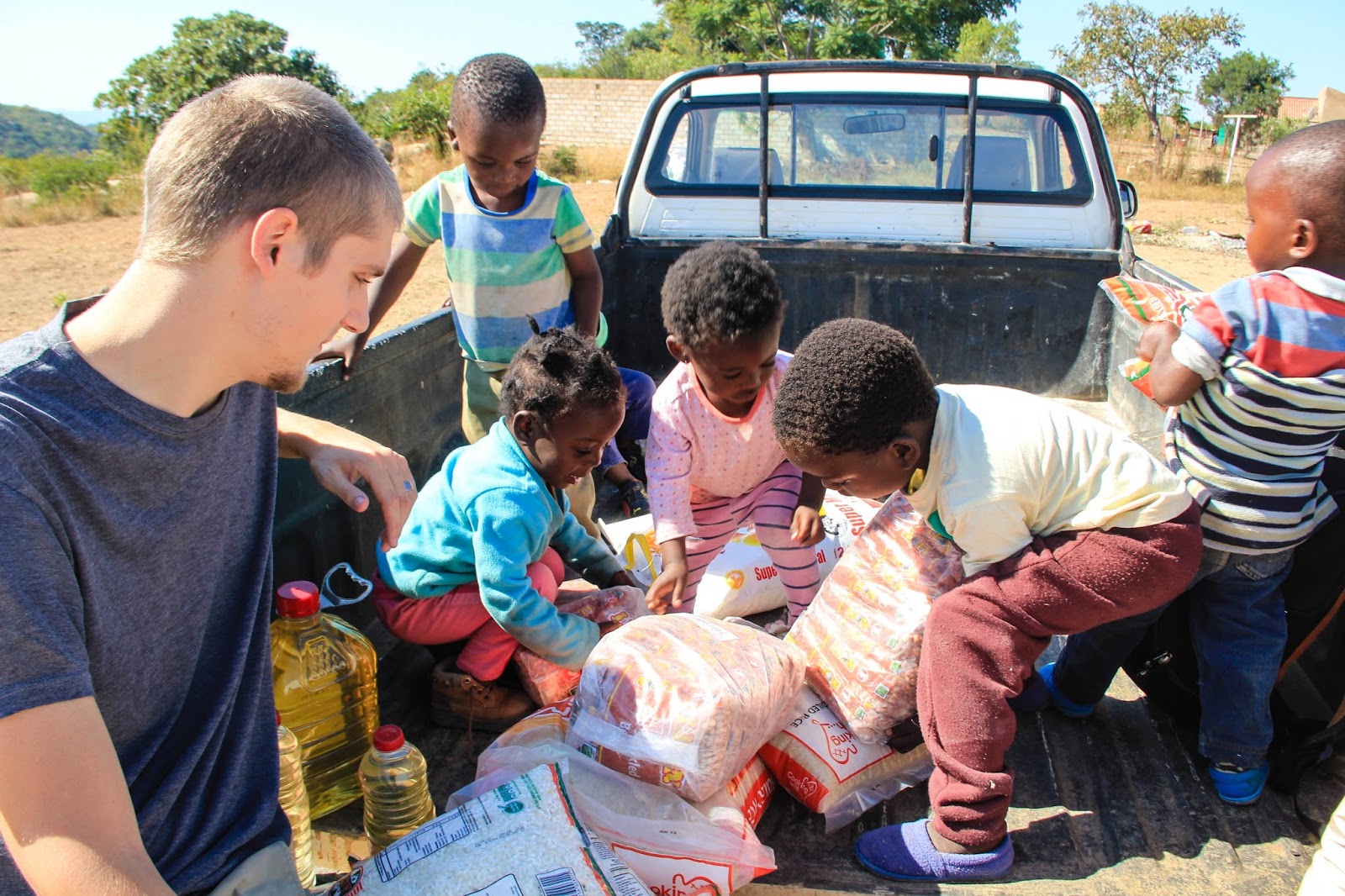
We have many partners as Hands at Work and increasingly we are seeing African partners come on board to care for communities in their own countries. This year we have seen a new South African partner agree to partner with one of our South African communities. We have also seen a growing partnership between a Nigerian partner and one of our communities in Nigeria. It is very encouraging to see people’s eyes opening in their own nations to the vulnerability around them. One such partner we have been working with for the past few years are a group of chefs. They have been providing a portion of food to some our South African communities. This food gets delivered to us at the Hub and we then take it turns as volunteers to join our Service Centre team (in our local office) to deliver the food to the various communities. This past month, Morgan and I got the opportunity to help with this process. We joined Thulane (our bookkeeper in our Hazyview Service Centre) and visited three communities to deliver food. One of the communities we visited is Zwelisha. As we pulled up in our truck, we saw some younger kids playing. In Zwelisha, the Care Workers help operate a crèche during the day to care for those young kids who are not old enough to be in school. Often these are kids of our Care Workers or of our older kids who are still in school. Young mothers are very common in South Africa. The fathers are very rarely around. This leaves many young children often left in the care of relatives during the day who often don’t have the resources to be able to care for an extra child or children. 

We are doing some traveling in the next couple of weeks, and then looking forward to a bit of a break in August.

- T 

We had some little helpers in Zwelisha Community


Monday, 9 May 2016

Choice

Every day we have so many choices. We probably don’t even realize many of the things we do in our days are choices because we have become so accustomed to them.

The choice to open a fridge and find food inside.

The choice to turn on a tap and have water flow out.

The choice to cover ourselves with a blanket at night.

For nearly all of us, these do not seem like choices. They seem like our rights.

But for so many families across Africa, these things are not a right or a choice. 

The choice to find food is not a choice because there is no food. And no money to afford food. 

The choice to have water every day is not a choice because the wells, rivers and boreholes have all run dry. 

The choice to have a blanket was always a luxury but now completely out of sight because the only income source has been taken away.

What makes me write all this? It is a crisis that is currently devastating people’s lives across Southern Africa. The drought crisis. It has made a few headlines overseas and only a few more in Africa itself, but across many of the communities we are working, it is all families can think about. Why is that? The drought. We are not seeing and feeling the full effect of crops that have failed and water sources that have completely dried up. This means that for many families, their only source of water has disappeared and their only source of food (and therefore small income these families did have) has also now disappeared. 

Recently, I had the privilege of visiting our local office in an area called Oshoek (another part of South Africa, about 3 hours away). My primary reason for this visit was to train our new bookkeeper. From this office, the team support 5 Communities. One of these communities is called Sthobela and I was able to visit this community and go on some home visits. 

We visited Moses and his mother. On the day we visited, Moses was not in school. When the Care Workers asked why, the mother said that she saw other kids were not at school so she assumed it was not a school day. This struck me and reminded me that so much information in our communities is communicated by word of mouth and it is just taken as truth. It was not a public holiday or a non-school day so Moses should have been at school. It is one of the many cultural things that our Care Workers have to encounter on a daily basis. Later in the home visit, one of the Care Workers asked if we could do anything to help the family. They asked if we could collect firewood for them. Two Care Workers, Devon (a Canadian volunteer) and myself got up to follow Moses to a nearby forest. We brought empty sacks to carry the wood in. As we followed Moses, it made me think that he knows the way to the forest, which isn’t unusual. But when we collected the wood and started carrying it back, it then hit me that Moses does this every few days to collect wood for his family. The sacks were very heavy, far too heavy for a 7 year old to be carrying and yet he does it because there is no choice for Moses. If he doesn’t get firewood, there will be no way for his family to keep warm or to boil what little likely contaminated water they had, making it safer to drink. At the end of our time together, we prayed for this family for God’s provision to continue for them but especially for the Care Workers to continue visiting this family and especially to ensure Moses keeps attending school. We encouraged Moses to work hard at his studies as it can open so many doors for him when he grows up. It is families like Moses’ that are being hit by the drought crisis. The only water that is available is right at the bottom of the mountains. Moses’ family lives part way up a mountain. So it is easy enough to get down to the water with the bucket but hauling it back up the mountain again is difficult, and it is if there is even water available. 

What can you do about the drought crisis? First of all, please share it with others you know. Friends, family, work colleagues. We need to get the word out there that many children and families across Africa will not survive if we do not respond. Secondly pray. God can make all things possible! Pray for unseasonable rain, pray that we know how to react well to needs we meet in our communities and pray for God to comfort those who we haven’t yet reached. Thirdly, please give. We want to be able to reach beyond what we are currently doing by helping even more kids and families for this drought season. But to do that we need extra funding. Consider how you can help get food and water to those who have no choice. 

If you want more about the drought crisis and how we are responding visit our website or send Morgan and I an email.

Morgan’s mum recent shared a heart-breaking story of her experience in Malawi and how it is affecting our children. Please take some time to read it. 

- T

Friday, 15 April 2016

Back to Nigeria

My recent trip to Nigeria was one that I had been eagerly anticipating for a few months. In my first few years with Hands, I had the privilege of visiting once or even twice a year. But the past couple of years, for many reasons, the timing hasn’t worked for me to get there. The last time I was in Nigeria was October 2013 when Morgan and I travelled to Nigeria together. As soon as I landed in Nigeria, it was like coming to another home again. Even though your senses get assaulted as soon as you land, it definitely felt very comforting to me to be coming back to a place I think of so often. The traffic is loud, the smell of car fumes is so strong and there are people everywhere! All this being said, it always such a blessing to be among people that have a special place in my heart. 
Our Service Centre office is also
the place we stay in Nigeria


For many of our Service Centres (SCs) or local offices across Africa this year, we are really pushing to support them better by having a member of an RST (regional support team) for longer periods of time. Lagos SC in Nigeria is no different despite it being thousands of kilometres away from the Nigeria support team here in South Africa. In this last trip, I arrived in Lagos to meet Jackie (one of our Kenyan volunteers). One of the primary reasons for me going to Nigeria for this trip was to spend time training our new bookkeeper, Vivian. She is a young woman with lots of potential. Many of my days in Nigeria were spent in the office training her in our financial procedures and processes. But I also had the opportunity to spend a couple of days in our communities. 

We work in two communities in Nigeria, one in Lagos and one in another town called Ibadan, about 3 hours away. In Lagos, our community, Ilaje, is very urban and a slum area, which is a huge contrast to many of our other communities across Africa. Our other community, Apatuku, is by contrast to Ilaje, much more rural. 

Left to right: Matthew (a teacher in Apatuku CBO),
myself, Efe (Toyin's daughter), Toyin, Jackie
Our trip to Ibadan included Jackie, myself and Toyin. Toyin is our current bookkeeper in Nigeria and transitioning into becoming our SC coordinator. She has been with us since 2009. As with many Nigerians, she has a very determined and unwavering personality. One of my highlights of this trip was to see how much she has grown over the past year. She has taken on a new leadership of this team and wants to see our work in Nigeria expand in so many ways this year. And we are committed to standing alongside her as she strives for that. Our journey to Ibadan began with a car ride on a road which is definitely one of the scariest in Africa! Due to the amount of traffic in Nigeria, drivers are used to driving very close to each other. This is bad enough in city traffic where you are going relatively slowly, but when on the motorway going 100 kph (60 mph) it is nerve-racking. Many prayers have been prayed on this road. Thankfully we made it there and back without incident. Our time in Ibadan was very special. I got to reconnect with kids who I had met a few years ago and meet some new kids. 

On our second day in Apatuku, we were able to do some Holy Home Visits. As we walked through the community, it was very quiet. I think it was made even quieter by the fact we had just come from the bustling city of Lagos a day earlier. On one of our visits, we met a young boy named Joseph. Joseph, who is 12 years old, had lived with his grandmother from birth. His mum and dad realised they could not bring him and his brothers up on the income they had so Joseph's grandmother stepped in to take care of him. Joseph's brother now also lives them after their parents’ situation got even worse because their dad got sick and their only source of income dried up. He now lives with his brother and grandmother. To earn some kind of income, Joseph's grandmother sells maize meal with corn but each one only sells for N10 (3p or $0.06) each. The Care Workers at Apatuku CBO have helped and encouraged Joseph to keep attending school and continue learning. Now, he loves learning and wants to keep on studying and work hard to eventually become a doctor. He will soon be taking the exams to get into secondary school and feels ready. At the end of our visit Joseph shared to us “I am confident that I can get 100% by God's grace”. This is a huge testimony to what God can do through people who are willing to put up their hand and say I will do what it takes to walk with those who have no voice. Care Workers, like Elijah, are able to visit children like Joseph, encourage them and being a parental figure in their lives. 

Ilaje Care Workers and teachers praising
God for his faithfulness
A few days after returning from Ibadan, our team travelled to our other community, Ilaje. As I said earlier, this community is very urban and in a slum of Lagos. In this community, we have a great community school which caters for vulnerable children for nursery classes and primary classes. The group of teachers and Care Workers serving in the Community Based Organisation(CBO)are incredible. They are some of the most dedicated volunteers I have ever met. One of our teachers there, Mrs Joseph, has taken in vulnerable children from the community and makes sure each of them is at school every day. If she sees one even just one of them is not attending for a few days in a row, she goes to visit that child and makes sure they are ok. This is the sign of a true Care Worker. As we were sitting with the Care Workers and teachers they shared a story with us of one of the children who was assessed and started receiving care in January. Her name is Sarah and she is one of 5 siblings. Sarah and her family used to live in another state of Nigeria but last year her father left the family for another woman, a common situation in that particular state of Nigeria. As is the custom, the mother and children moved to the community of Ilaje. Over a few months last year, the mother grew sicker and sicker. At this stage the Care Workers in Ilaje were not aware of this family. Unfortunately the family did not have enough money to get the mother to hospital and she passed away in December. By the end, she was very sick and she actually died in the house they were living in. The family’s neighbour heard about this and tried to phone the father. He did not really want any part of their lives but he suggested that the church could help. Unfortunately, when the mother was sick it meant they could not get to church and the elders of the church decided that because the family had not attended the church in a while, the church couldn’t help. This meant the mother had a government funeral. The kids were then left with no mother (having watched their mother die) and no-one to look after them as they lived far from relatives. A groups of ladies in the community came together, but the only way they could help these 5 children was to care for some of them each, meaning that the siblings could not all live together. Sarah, who is 14 years old and in grade 5 and her young brother Abraham were taken in by a lady named Angie, who already has 6 children of her own. She knew the struggles of the family and also knew there was a place in the community where vulnerable children can revceive hope. Angie introduced Sarah and Abraham to Mrs Michaels, one of the Care Workers in Ilaje. Both Sarah and Abraham now attend Ilaje school. The trauma they have been through is enormous but we pray that through the Care Workers in Ilaje, they are able to be with other children, play games, receive a hot meal every day and receive parental love and support. 

As I reflect on my trip to Nigeria, I am constantly reminded of the dedication of our Care Workers who give absolutely everything they have to care for the most vulnerable children in Africa. It gives me an increased motivation to know that the numbers I work on most days are helping to support Care Workers like Mrs Joseph care for children like Sarah and Joseph. 

- T